 Gursimran
Publications
My research focuses on efficient LLM inference, reinforcement learning fine-tuning, and multimodal learning.
Below are selected publications and preprints. See my Google Scholar profile for the full list and citations.
-
MARLaaS: Multi-Tenant Asynchronous Reinforcement Learning as a Service
Preprint, 2026
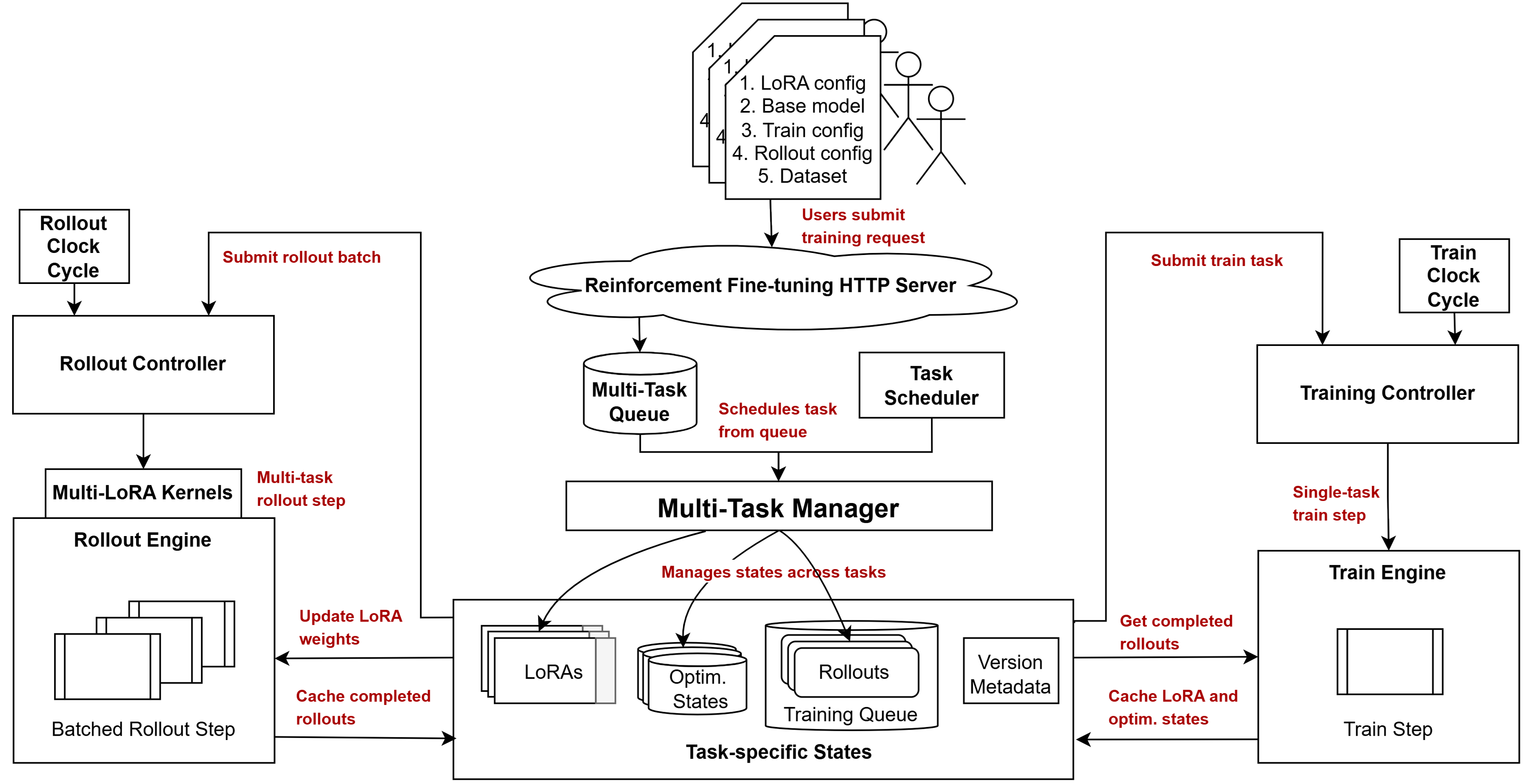
An asynchronous RL service that shares a base model across tenants using LoRA adapters. Independently scheduled rollout, environment, and training stages let concurrent tasks progress at their own pace while improving accelerator utilization.
-
LLM Inference Scheduling: A Survey of Techniques, Frameworks, and Trade-offs
TechRxiv preprint, 2025
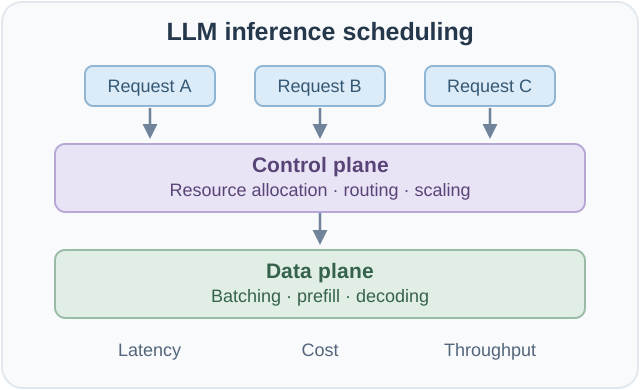
A survey of scheduling strategies for LLM serving across the control and data planes, covering batching, resource allocation, and multi-tenant workloads, with a comparison of latency, cost, and throughput trade-offs.
-
ElasticMoE: An Efficient Auto Scaling Method for Mixture-of-Experts Models
Preprint, 2025
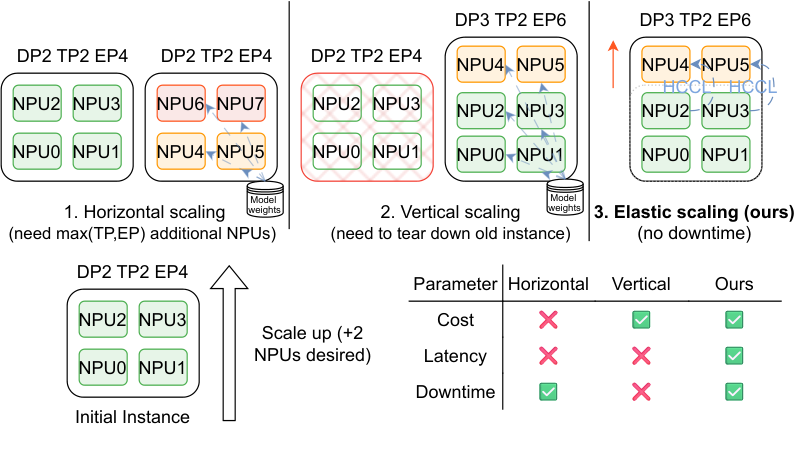
An elastic serving system that scales mixture-of-experts models while continuing to serve requests. Decoupling inference from memory operations enables fine-grained scaling with up to 9× lower scale-up latency in our evaluation.
-
Efficiently Serving Large Multimodal Models Using EPD Disaggregation
ICML 2025
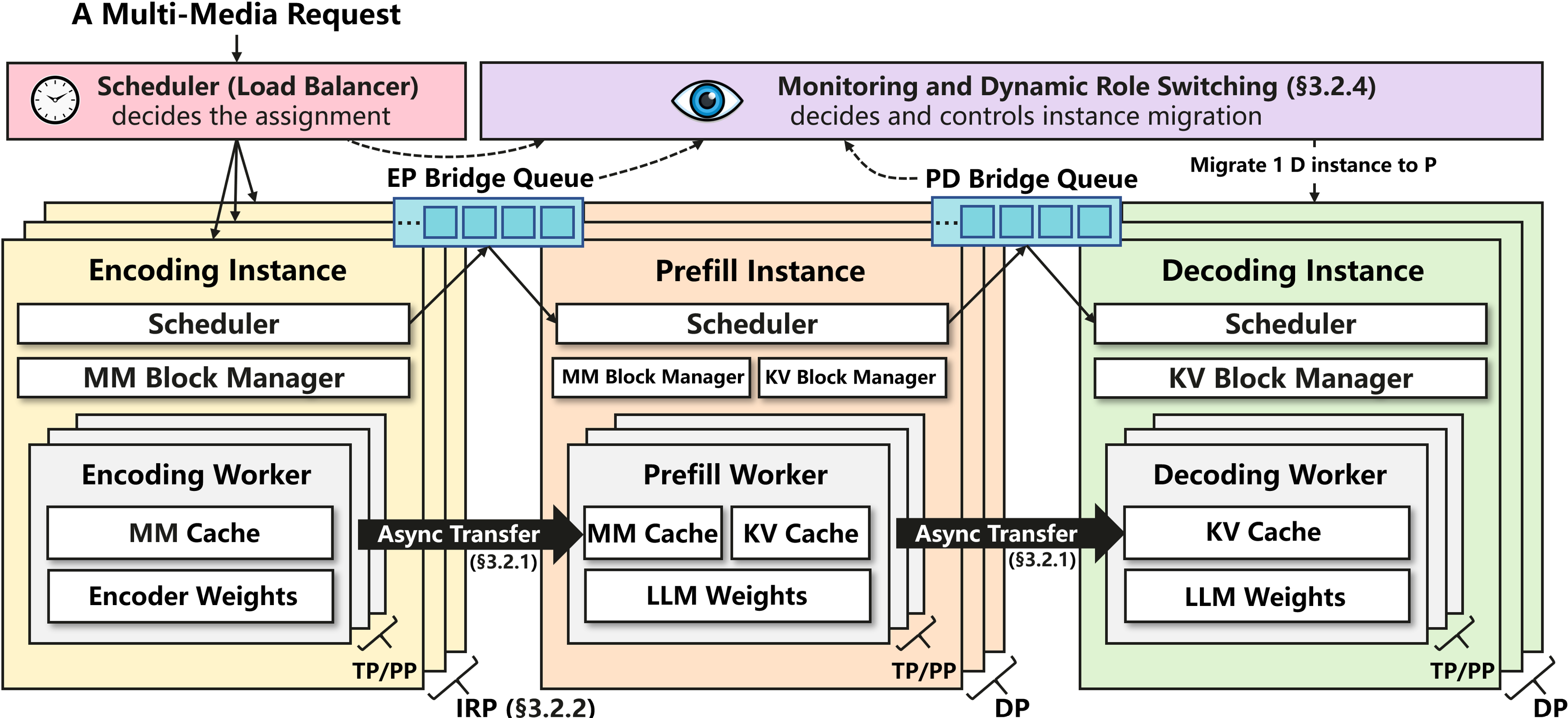
Separates encoding, prefill, and decoding so each serving stage can scale independently. Our evaluation showed up to 15× lower peak memory use and up to 71% lower time to first token.
-
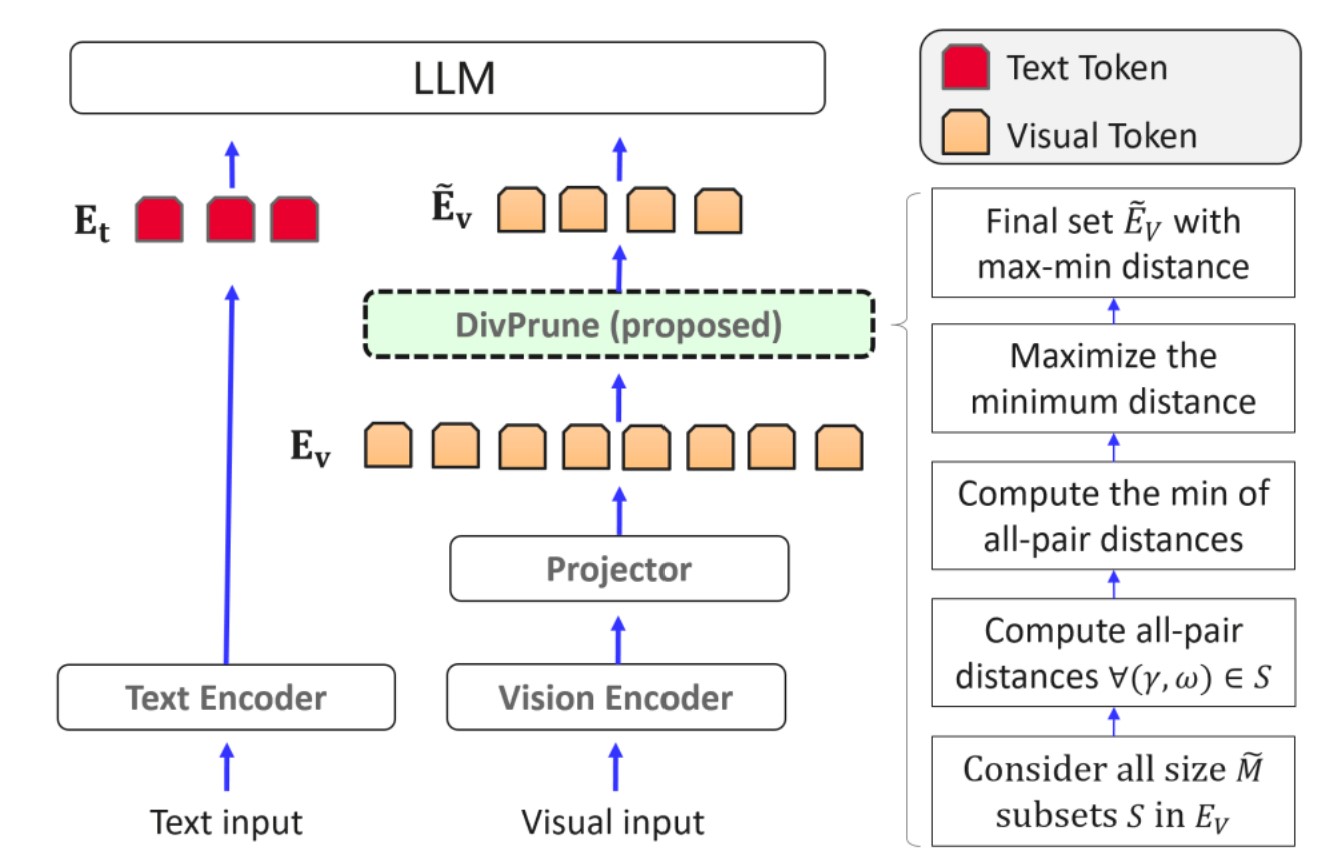
DivPrune: Diversity-based Visual Token Pruning for Large Multimodal Models
CVPR 2025
Training-free visual token pruning that preserves diverse information before it reaches the language model. Prunes up to 60% of visual tokens with negligible accuracy loss and reduces time to first token by roughly 50%.
-
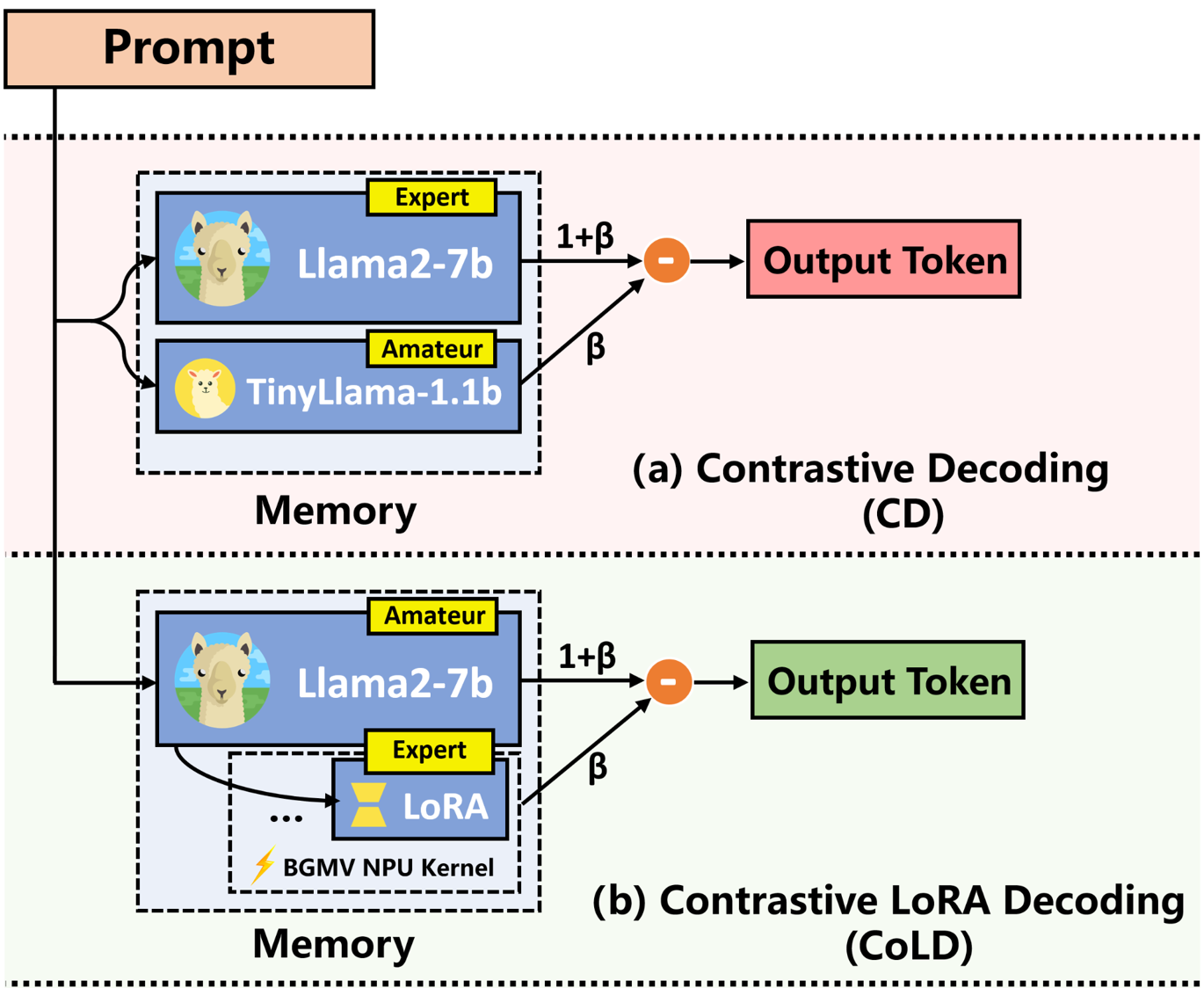
Enhancing Learned Knowledge in LoRA Adapters Through Efficient Contrastive Decoding on Ascend NPUs
KDD 2025
Contrastive LoRA Decoding emphasizes task-specific knowledge in an adapter by comparing its predictions with the base model. An optimized Ascend NPU kernel improves task accuracy while reducing decoding latency and memory use.
-
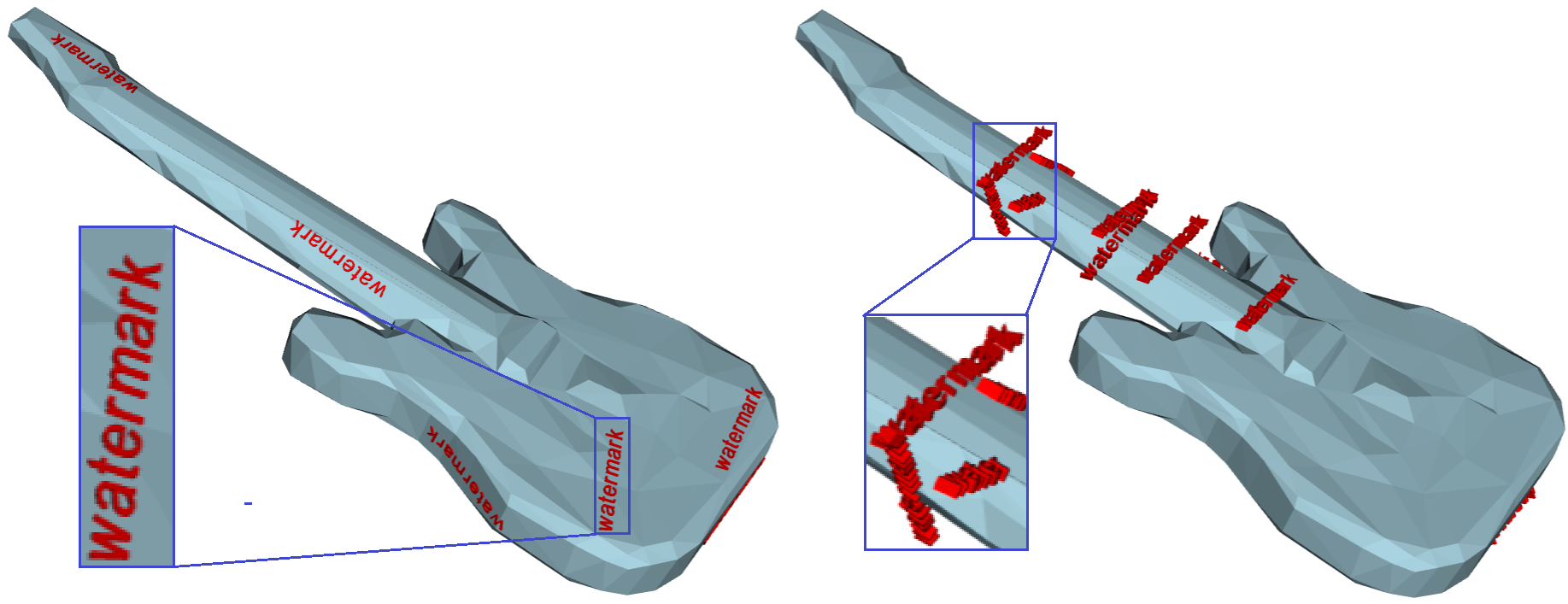
Towards Secure and Usable 3D Assets: A Novel Framework for Automatic Visible Watermarking
WACV 2025 (Oral presentation)
A framework for automatically placing visible watermarks on 3D assets, balancing protection with usability.
-
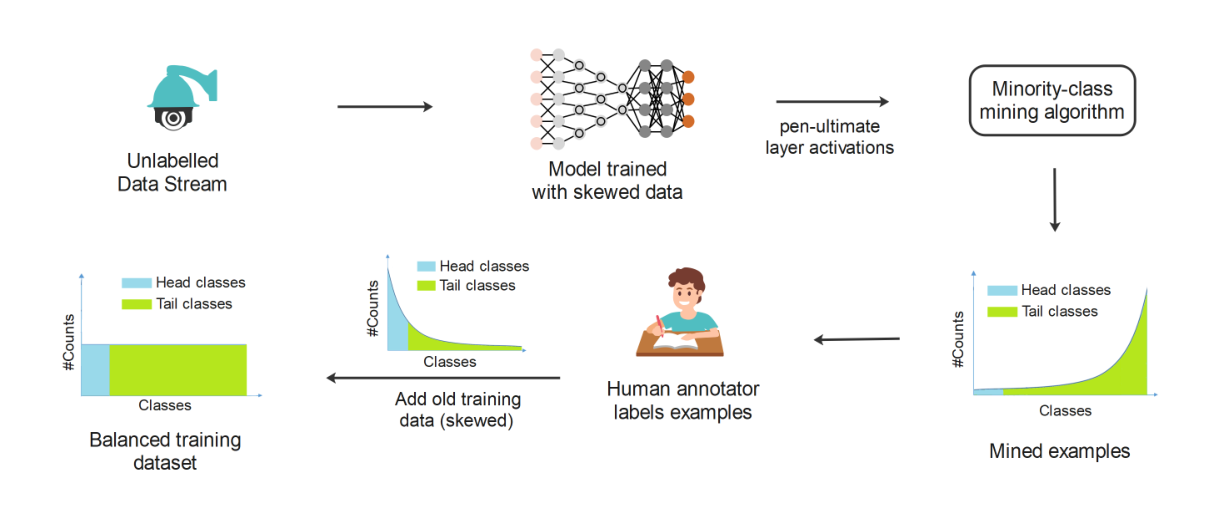
Mining Minority-Class Examples with Uncertainty Estimates
MMM 2022 (Oral presentation)
Identifies rare-class examples in unlabeled data by strengthening suppressed class activations and using uncertainty estimates. The mined examples help balance training data and improve performance on underrepresented classes.
-
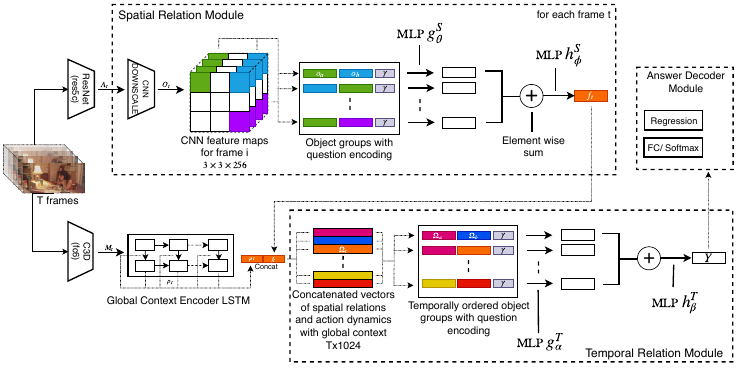
Spatio-Temporal Relational Reasoning for Video Question Answering
BMVC 2019 (Oral presentation)
A relational network that models interactions between objects and how they change over time to answer questions about videos. Joint spatial and temporal reasoning improves performance on challenging tasks such as counting.
-
Question Independent Grading Using Machine Learning: The Case of Computer Program Grading
KDD 2016 (Oral presentation)
A question-independent, semi-supervised model for grading program correctness, code quality, and runtime efficiency. Reduced question-development effort by 5×; the assessment systems were deployed at 1M+ programmer scale.